 FAST & FREE SHIPPING ON ALL ORDERS
 LIFETIME WARRANTY
 SHOP NOW, PAY LATER - ZERO INTEREST
 25% OFF - USE CODE: VIP

Women's Bracelet Sizing Guide for a Perfect Fit
A bracelet can have all the shine in the room and still miss the look if the fit is off. Too tight feels restrictive and makes a chain sit awkwardly. Too loose can make a tennis bracelet flip, slide over your hand, or get lost beneath your sleeve. This womens bracelet sizing guide gives you the fast, no-guesswork way to find a fit that looks polished, feels comfortable, and keeps your stack looking intentional.
Women's Bracelet Sizing Guide: Start With Your Wrist
Your wrist measurement is the foundation. Do not use an old bracelet as your only reference unless it already fits exactly how you want. Different styles are meant to sit differently, and a snug Cuban link does not wear like a loose charm bracelet.
Wrap a flexible measuring tape around the part of your wrist where you normally wear bracelets, usually just above the wrist bone. Keep it flat against the skin without pulling it tight. Record the measurement in inches. If you do not have a tape measure, use a strip of paper, ribbon, or string, mark where the ends meet, then measure that length with a ruler.
Measure twice before ordering, especially if you are between sizes. A difference of a quarter inch can change the feel of a close-fitting chain bracelet. If you are shopping for a gift, a bracelet she already wears is the best reference. Lay it flat and measure from end to end, including the clasp, then compare that measurement with the desired style and fit.
The Quick Fit Formula
Once you have your wrist measurement, add room based on the look you want. For a close, clean fit, add about 1/4 to 1/2 inch. For a classic everyday fit, add 3/4 inch. For a relaxed fit with movement, add 1 inch or more.
For example, someone with a 6-inch wrist will usually like a 6.5-inch bracelet for a snug look, around 6.75 to 7 inches for everyday wear, and 7 to 7.5 inches for a looser silhouette. There is no single "correct" amount of space. The right choice depends on the bracelet's width, weight, clasp, and the way you want it to show up with your outfit.
Choose the Right Fit for the Bracelet Style
A sizing number only tells part of the story. The same 7-inch length can feel completely different in a slim tennis bracelet and a bold chain.
Tennis Bracelets Need Controlled Movement
A tennis bracelet should have a little drape, not a lot of swing. It needs enough room to bend naturally around the wrist and catch light from every angle, but not so much that it rotates constantly or catches on everything. Aim for a fit that lets you slide one finger between the bracelet and your wrist with slight resistance.
If you are layering a tennis bracelet with a watch or another chain, keep it on the closer side. A tighter fit helps each piece hold its place and creates that clean, stacked look instead of a tangle of competing metal and stones.
Chain Bracelets Can Go Snug or Statement Loose
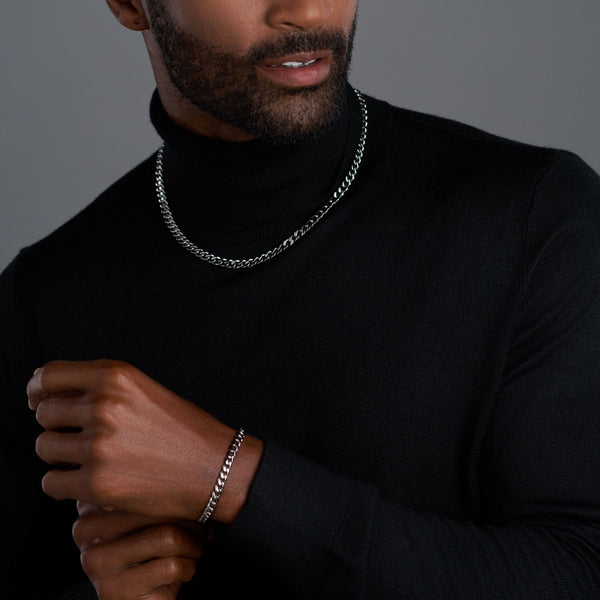
Cuban link, rope, paperclip, and iced-out chain bracelets have more visual weight. A close fit puts the links front and center and gives the bracelet a tailored, high-impact look. A slightly roomier fit feels more relaxed and lets the chain move when you gesture.
With wider links, avoid sizing too tightly. Thick chains take up more physical space around the wrist than delicate styles, so they can feel restrictive even when the measurement looks right on paper. When you are between sizes, choosing the larger option is usually the safer move for a wide Cuban or chunky statement bracelet.
Cuffs and Bangles Follow Different Rules
Cuffs are not judged only by wrist circumference. You also need to consider the opening and whether it can pass comfortably over the narrowest part of your wrist. An adjustable cuff should sit securely without pinching. If you have to force it on or bend it dramatically every time, it is not the right fit.
Bangles need to clear your hand, not just your wrist. Measure around the widest part of your hand while bringing your thumb and pinky together as if you were sliding on a bangle. That number helps you choose an inner diameter that goes on easily but does not fall off when your arm is down.
Charm and Beaded Bracelets Need Extra Space
Charms, beads, and larger decorative elements add bulk. Give these bracelets a little more breathing room than a smooth chain. The added space keeps the details from pressing into your skin and lets the bracelet move the way it was designed to. A relaxed fit also makes a charm bracelet feel more effortless, especially when you wear it beside sleek tennis or chain styles.
How to Tell if Your Bracelet Fits
A great bracelet fit should look easy. You should be able to move your wrist, type, drive, and reach for your coffee without feeling the clasp dig in. For a standard chain or tennis bracelet, one finger should fit between the bracelet and your wrist. That is a strong everyday benchmark.
Your bracelet is probably too tight if it leaves a deep mark, feels difficult to clasp, pinches when you bend your wrist, or looks stretched across the top of your arm. It is likely too loose if it regularly spins so the design faces inward, slips over the heel of your hand, or hangs low enough to catch on a table edge.
Some movement is a good thing. Jewelry should reflect light, not sit frozen. The goal is controlled movement that looks intentional.
Build a Bracelet Stack That Sits Right
Stacking changes sizing. Three bracelets with the exact same fit can bunch together and make your wrist feel crowded. The cleanest stacks use slight size variation: one close-fitting anchor piece, one standard-fit bracelet, and one with a little more room.
Start with the piece you want people to notice first. A tennis bracelet can bring the sparkle, while a Cuban link adds shape and a slim chain creates contrast. Keep the widest or heaviest bracelet closer to the wrist so it stays stable. Let lighter pieces sit just above or below it.
Mixing metals can look sharp when the sizing is deliberate. Gold-tone and silver-tone bracelets do not need to match, but their proportions should. Pair a thick chain with a finer tennis bracelet, or balance an iced-out piece with a minimal link. If every bracelet is oversized and wide, the stack can look heavy instead of elevated.
When adding a watch, treat it as the anchor. Wear the watch snug enough that it does not rotate, then choose bracelets with a bit of freedom beside it. Leave a small gap so the metal does not constantly rub or compete for space.
Between Sizes? Choose Based on Your Style
If your wrist measures between two listed sizes, the best answer depends on the bracelet. Choose the smaller size if you want a fitted, sleek look and the style is slim or flexible. Choose the larger size for wide links, stiff designs, charms, or any bracelet you want to layer.
Consider your daily routine too. If you work at a keyboard, lift, train, or use your hands all day, a snug but comfortable fit can stay out of the way. If you are styling jewelry for nights out, photos, or a statement look, a little extra movement can make the piece look more dynamic.
Also check whether the bracelet includes an extender. An extender gives you more control, especially when you want one piece to work solo on some days and as part of a stack on others. It is one of the easiest ways to keep your jewelry flexible without sacrificing the look.
Get the Fit, Then Make It Yours
The right size is what makes a bracelet feel like part of your look instead of an accessory you keep adjusting. Measure your wrist, account for the style, and choose the fit that matches how you want to wear it. Then layer the shine, add the statement link, and let your wrist stack do what it came to do: get noticed.