 FAST & FREE SHIPPING ON ALL ORDERS
 LIFETIME WARRANTY
 SHOP NOW, PAY LATER - ZERO INTEREST
 25% OFF - USE CODE: VIP

How to Measure Bracelet Size for the Right Fit
A bracelet can have the right shine, width, and attitude, then still miss the mark if it slides over your hand or grips your wrist too tight. Knowing how to measure bracelet size takes less than two minutes, and it makes the difference between a piece that looks intentional and one that never feels quite right.
The goal is not always the same fit. A chunky Cuban link bracelet should sit differently than a slim tennis bracelet, and a stack of bangles needs more room than a single close-fitting chain. Start with your wrist measurement, then choose the amount of space that matches the style you want to wear.
How to Measure Bracelet Size at Home
Use a flexible measuring tape if you have one. Wrap it around the wrist where you normally wear a bracelet, just below the wrist bone. Keep the tape flat against your skin without pulling it tight, and write down the measurement in inches.
No measuring tape? Use a strip of paper, string, or shoelace instead. Wrap it around your wrist, mark where the ends meet, then lay it flat next to a ruler. That number is your wrist size.
Measure the wrist you actually plan to wear the bracelet on. Your dominant wrist can be slightly larger, and even a small difference matters when you are choosing a fitted tennis bracelet or a bold chain with a secure clasp.
For the most accurate result, measure at the end of the day. Hands and wrists can swell a little after a workout, heat, travel, or a long day on your feet. A bracelet that fits perfectly first thing in the morning may feel restrictive later on.
Add Space Based on the Fit You Want
Your wrist measurement is the starting point, not necessarily the bracelet size you should buy. Add length according to the look and comfort level you want.
For a close, tailored fit, add about 1/4 to 1/2 inch. This works well for slim tennis bracelets, delicate chains, and pieces you want to stay in one place. It creates a polished look, but it may not be the best choice if you prefer room for movement.
For a standard everyday fit, add 1/2 to 1 inch. Most people find this range comfortable for rope bracelets, Cuban links, and classic chain styles. The bracelet should move naturally without rotating so much that the clasp keeps landing on top of your wrist.
For a relaxed or stacked fit, add 1 to 1 1/2 inches. This is the move for thicker links, layered wrist stacks, watches paired with bracelets, or any look meant to feel loose and high-impact. More room creates movement, but too much length can make a heavy bracelet slide toward your hand and feel unbalanced.
A quick fit check: when the bracelet is on, you should be able to slide one finger comfortably between the chain and your wrist for a standard fit. If you can fit two fingers with plenty of room, it may be too loose for a single bracelet.
Bracelet Size Chart in Inches
Most adult bracelet sizing begins around 6 inches and extends to 9 inches or more. The right size depends on wrist circumference and the added room you choose.
| Wrist measurement | Close fit | Standard fit | Relaxed fit |
| --- | --- | --- | --- |
| 5.5 inches | 6 inches | 6.5 inches | 7 inches |
| 6 inches | 6.5 inches | 7 inches | 7.5 inches |
| 6.5 inches | 7 inches | 7.5 inches | 8 inches |
| 7 inches | 7.5 inches | 8 inches | 8.5 inches |
| 7.5 inches | 8 inches | 8.5 inches | 9 inches |
| 8 inches | 8.5 inches | 9 inches | 9.5 inches |
This chart is a strong baseline, but bracelet construction changes the feel. A 7-inch flexible tennis bracelet and a 7-inch wide Cuban link will not wear exactly the same way. The wider and heavier the piece, the more likely you are to want a little extra breathing room.
Size Chain Bracelets by Width and Weight
Chain bracelets make a statement because they have presence. That same weight and width can affect comfort, especially with bolder designs.
Cuban Link and Rope Bracelets
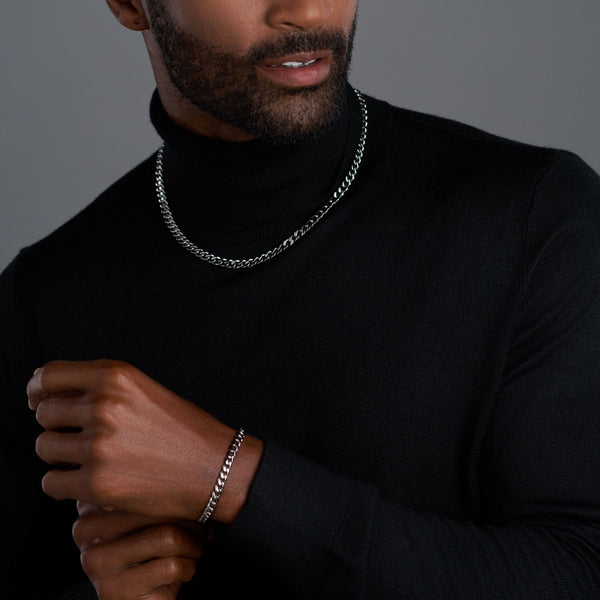
For Cuban links, Miami Cuban styles, and rope bracelets, a standard fit is usually the sweet spot. Add about 3/4 inch to your wrist measurement if you want the bracelet to look clean without feeling restrictive. If the link is particularly wide, round that up to 1 inch.
A tight chunky chain can pinch when you bend your wrist. It also loses some of its visual impact. Give substantial links enough room to lay flat and catch the light from every angle.
Tennis Bracelets
Tennis bracelets look best when they follow the wrist closely, but they should never feel locked in place. Add 1/2 inch to your wrist measurement for a refined fit. If you are between sizes, sizing up is usually safer, particularly if the bracelet does not have adjustable links.
A tennis bracelet that is too loose can twist, causing the stones to face inward rather than out. The best fit lets the bracelet move slightly while keeping the front design visible.
Beaded and Stretch Bracelets
Stretch bracelets do not need added length in the same way because the elastic expands over your hand. Measure your wrist and choose the closest stated size. Do not size down aggressively just because it stretches - constant tension can wear out elastic faster and make the bracelet feel uncomfortable.
Beaded styles also depend on bead size. Larger beads take up more visual and physical space, so a relaxed fit often looks more balanced than a tight one.
How to Size Cuffs, Bangles, and Adjustable Bracelets
Cuffs and bangles are measured differently because they must pass over your hand, not just sit around your wrist.
For a closed bangle, bring your fingers together as if you are sliding on the bracelet, then measure around the widest part of your hand at the knuckles. Compare that circumference with the bangle's inner diameter or stated fit. Your wrist may be slim, but your hand determines whether a closed bangle can actually go on.
For an open cuff, measure your wrist as usual. The opening should be wide enough to slide over the side of your wrist without forcing it. Adjustable cuffs offer more flexibility, but do not repeatedly bend a rigid metal cuff to make major size changes. Too much bending can weaken its shape over time.
Adjustable chain bracelets are the easiest option when you are gifting or building a stack. Still, check the smallest and largest setting. An adjustable clasp is only useful if your wrist measurement falls comfortably within its range.
Planning a Bracelet Stack
A stack should look layered, not tangled. Start with the bracelet that sits closest to the wrist, then give each additional piece slightly more room. For example, if your standard single-bracelet size is 7.5 inches, a second chain at 7.75 or 8 inches can create separation without looking disconnected.
Mixing widths adds visual power, but it also changes how the stack feels. A slim tennis bracelet can sit close while a thicker Cuban link gets extra room. If you are wearing a watch, leave enough space so the bracelet does not constantly hit the case or crowd the clasp.
There is no rule saying every piece in a stack must match exactly. Gold-tone rope links, iced-out tennis styles, and clean metal chains can work together when the fit feels deliberate. The key is to avoid making every bracelet the same tight length.
Buying a Bracelet as a Gift
When you cannot measure someone else's wrist, an adjustable design is the lowest-risk choice. For a non-adjustable bracelet, 7 inches is often a common women's size, while 8 inches is a common men's size, but those are starting points rather than guarantees.
Pay attention to their existing jewelry if you can. Someone who wears a watch, thick chains, or loose stacked bracelets will likely prefer more room than someone who wears a single minimal piece. If you are choosing a statement chain from Imperium, a slightly roomier standard fit usually gives the piece the confident, easy look it was made for.
Common Bracelet Sizing Mistakes
The biggest mistake is measuring too tightly. A string pulled snug around the wrist gives you wrist circumference, but it does not account for the bracelet itself, the clasp, or normal movement. Add the appropriate fit allowance before selecting a length.
Another mistake is ignoring the bracelet's width. A thin 7-inch chain may feel perfect, while a thick 7-inch link can feel noticeably smaller because it occupies more space around the wrist. When you are between sizes, wider styles generally favor the larger option.
Finally, do not size a bracelet based only on a watch band. Watch bands are designed to stay stable and often fit closer than fashion bracelets. Use your actual wrist measurement, then choose the fit that supports the look you want.
The right bracelet size should feel effortless the moment it clicks into place. Measure once, choose the fit with intention, and let the chain, stones, or stack do what it is supposed to do: put your style front and center.