 FAST & FREE SHIPPING ON ALL ORDERS
 LIFETIME WARRANTY
 SHOP NOW, PAY LATER - ZERO INTEREST
 25% OFF - USE CODE: VIP

How to Style Chain Stacks That Hit Hard
A chain stack can make a plain tee look styled, a button-down look expensive, and a night-out fit look finished. If you’ve been wondering how to style chain stacks without looking overdone, the answer is less about adding more and more about choosing pieces that create contrast, balance, and presence.
The best stacks look intentional. You want each chain to bring something different to the lineup - a different length, texture, width, or shine level - while still feeling like they belong together. That’s what gives you that clean, elevated look instead of a pile of metal fighting for attention.
How to style chain stacks without guessing
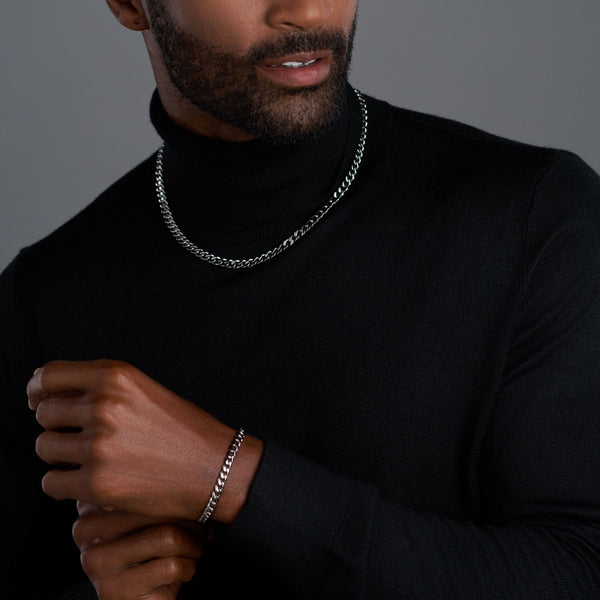
Start with the base chain. This is the piece that sets the tone for everything else. If your style leans minimal, your base might be a slim rope or a clean box chain. If you want more impact, a Cuban or tennis chain usually leads the stack better because it already carries visual weight.
From there, build around one strong idea. Maybe the idea is mixed textures. Maybe it’s all gold tones with different widths. Maybe it’s one iced piece balanced by two cleaner chains. What matters is that the stack has a center of gravity. When every chain is trying to be the loudest piece, the whole look gets messy fast.
Length does most of the work. A stack with two or three chains in nearly the same drop tends to clump together and read as accidental. Give each piece room. A close necklace paired with a mid-length chain and a longer pendant usually creates the cleanest shape on the chest. You don’t need huge spacing, but you do need separation people can actually see.
Start with length, then add width
If you’re learning how to style chain stacks, length is the first thing to fix and width is the second. Most strong stacks have a clear progression. The shortest chain sits close and frames the neck. The middle chain fills the space. The longest piece pulls the eye downward and finishes the look.
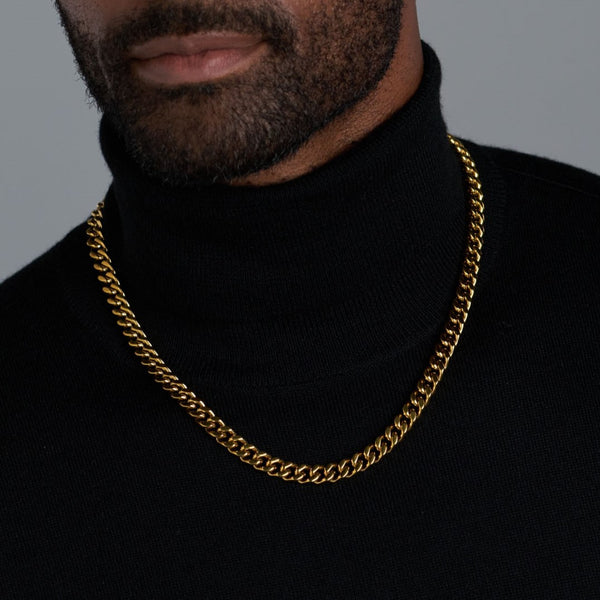
Width should follow the same logic. If every chain is thick, the stack can feel heavy, especially with casual daywear. If every chain is thin, it can disappear into the outfit. Usually, the best move is mixing one standout width with slimmer support pieces. A 5mm or 6mm Cuban can anchor the stack, while a slimmer rope or tennis chain adds polish without crowding it.
That said, it depends on your style and build. A wider chest or oversized streetwear can carry bolder gauges without looking too busy. A tighter tee, open collar, or more tailored fit usually looks sharper with a stack that has one statement piece and one or two cleaner layers.
The easiest stack formulas
If you want a setup that works almost every time, pair a slim rope chain with a medium Cuban and a longer pendant chain. You get shine, structure, and a focal point without overthinking it.
Another easy win is a tennis chain with a plain link chain. The contrast does the work for you. The tennis piece brings flash, and the simpler chain keeps the look grounded.
If you like a more understated flex, go monochrome with two or three chains in the same metal tone but different link styles. It feels expensive because it looks controlled.
Pick one feature to stand out
A good chain stack needs hierarchy. One chain should lead. That could be the thickest chain, the brightest chain, or the one with the pendant. Once you choose the lead piece, everything else should support it.
This is where people usually miss. They combine an iced tennis chain, a heavy Cuban, a large pendant, and another thick chain, then wonder why the look feels loud in the wrong way. The issue isn’t that the pieces are too bold. It’s that there’s no visual break.
If your lead piece is iced, keep the other chains cleaner. If your lead piece is a pendant, let it breathe by using slimmer chains around it. If your lead piece is a chunky Cuban, skip another equally chunky chain unless you’re going for a full statement look and your outfit is simple enough to carry it.
When pendants work best
Pendants are strongest when they sit on the longest chain in the stack. That gives them space to read clearly and keeps them from tangling with the shorter pieces. A pendant in the middle of two chains can work, but only if the size is controlled. Too large, and it disrupts the whole layout.
Pendants also pair better with some chain styles than others. Rope, box, and Franco chains usually carry pendants cleanly. A very thick Cuban with a pendant can look strong, but it’s already a high-impact move, so the rest of the stack should stay restrained.
Match the stack to the outfit
Knowing how to style chain stacks also means knowing when to pull back. Jewelry doesn’t live on its own. It works with the neckline, fabric, and energy of the fit.
With crewnecks and plain tees, chain stacks show up best when the top chain sits above the collar line or just at it, and the lower chains fall neatly over the shirt. This keeps the stack visible and gives the outfit shape.
With open collars, you have more room to play. A slightly shorter chain under the collar and a longer piece below it creates an easy layered look that feels polished without trying too hard. This is one of the best settings for a pendant because the neckline naturally frames it.
Hoodies and heavier streetwear can handle more weight. Chunkier Cubans, thicker ropes, and bolder pendants feel right there because the clothing already has volume. But if your outfit has graphics, loud patterns, or heavy embellishment, simplify the stack. Let either the clothes or the chains be the statement.
For dressier fits, cleaner wins. A tennis chain, slim Cuban, or polished rope stack can sharpen a blazer, button-down, or monochrome set fast. Big visual payoff, no extra noise.
Mixing metals, textures, and shine
Mixed-metal stacks can look sharp, but they need a reason. Gold and silver together work best when the contrast appears intentional, not random. A silver watch, gold ring, and mixed chain stack can tie together if each tone shows up more than once. One random silver chain in an otherwise all-gold setup usually reads unfinished.
Texture mixing is easier than metal mixing. Rope with Cuban, box with tennis, Franco with pendant chain - that kind of contrast adds dimension fast. It keeps the stack from looking flat, especially if everything is the same color.
Shine level matters too. Full high-polish on every piece can be a lot for daytime. Mixing one iced or high-shine chain with matte or simpler links gives you more control. You still get flash, just without crossing into overload.
Keep it balanced with the rest of your jewelry
A chain stack doesn’t need to carry the whole look alone. Bracelets, rings, earrings, and a watch should feel connected to it. That does not mean perfectly matched. It means they should speak the same style language.
If your chains are bold and iced, a plain leather bracelet may feel disconnected. If your chains are clean and minimal, a massive statement watch can hijack the outfit. Usually, the smoothest move is to repeat one visual cue - the same metal tone, a similar width, or the same level of shine.
This is also where matching sets make life easier. A chain-and-bracelet combo or coordinated tone across your jewelry takes out the guesswork and gives the whole look a more finished feel. If you want a stack that looks put together with minimal effort, starting from a set is a smart play.
Common mistakes that weaken a stack
The biggest mistake is stacking pieces that are too similar. Same length, same width, same link - there’s no contrast, so the look falls flat. The next mistake is ignoring scale. Thin chains can get lost under oversized clothes, while thick stacks can overpower a lean outfit.
Another problem is forcing trends that don’t fit your style. Not everyone needs a heavy iced stack. Not everyone wants a minimalist two-chain look. The best stack is the one that fits your rotation, not the one that only looks good in a product shot.
And yes, quality of finish matters. Even affordable fashion jewelry should look polished, intentional, and built to wear often. A stack stands out more when the plating, clasp feel, and overall shine level look consistent across the pieces.
How to build a chain stack you’ll actually wear
The stack you reach for most is usually the one that works with your real wardrobe. Start with two chains you can wear every day, then add a third for more impact. That approach gives you options. You can go clean during the day and layer up when the outfit calls for more presence.
If you’re buying with versatility in mind, focus on one staple link, one texture piece, and one statement option. Think Cuban, rope, and either a tennis chain or pendant. That mix covers most looks without making every outfit feel the same.
Imperium’s whole lane is built around this kind of styling - bold singles, stack-ready chains, matching sets, and pieces that give you maximum look without luxury-store hesitation. The point is simple: your stack should look expensive, feel easy, and work hard across more than one fit.
A strong chain stack doesn’t need to be complicated. It just needs intention. Pick a lead piece, create spacing, mix texture with control, and let the outfit set the limit. When the balance is right, the chains don’t just accessorize the look - they become the reason it hits.