 FAST & FREE SHIPPING ON ALL ORDERS
 LIFETIME WARRANTY
 SHOP NOW, PAY LATER - ZERO INTEREST
 25% OFF - USE CODE: VIP

How to Choose Chain Length for Your Look
A chain can be the detail that pulls an entire fit together - or the piece that disappears under your collar. Knowing how to choose chain length makes the difference. The right drop puts your Cuban link, rope chain, pendant, or tennis chain exactly where it belongs: front and center.
Chain length is not about following one rule. Your neckline, build, chain width, pendant size, and the way you want the piece to hit all matter. A close-fitting chain gives a clean, stacked look. A longer chain brings more movement and makes pendants the focal point. Start with the look you want people to notice.
How to Choose Chain Length by Fit
Chain length is measured from one end of the clasp to the other. It may sound obvious, but the same length can sit differently depending on neck size, shoulder width, chest shape, and the thickness of the chain itself. A wide 12 mm Cuban will take up more room around the neck than a slim 3 mm rope chain, so it can feel shorter even when both are listed at 20 inches.
For a close, high-impact fit, most shoppers start at 16 to 18 inches. These lengths sit around the base of the neck or collarbone on many people. They are strong choices for slim chains, tennis styles, chokers, and layering pieces that need to stay visible above an open collar.
At 20 inches, a chain generally lands around the collarbone to upper chest. This is one of the most versatile lengths for men and women because it works with tees, button-downs, hoodies, and lower necklines without feeling too tight. If you are buying one everyday chain, 20 inches is often the confident, easy-to-style move.
A 22-inch chain usually falls across the upper chest. It gives Cuban links, rope chains, and statement chains more presence, especially when you wear a crewneck or a hoodie. It also creates more separation from your neckline, which helps a thicker chain look intentional instead of crowded.
At 24 inches and longer, chains move into pendant territory. The extra drop creates space for a cross, initial, medallion, dog tag, or iced-out piece to stand out. Longer chains can also work well over a shirt, but remember that a heavy pendant adds visual weight. Choose a length that gives it room rather than letting it sit right at the collar.
Use Your Neckline as the Starting Point
Your clothes decide how much of the chain is actually seen. A chain that looks perfect with a scoop-neck tee may disappear under a crewneck sweatshirt. Before choosing a length, picture the outfits you wear most.
With crewnecks and tees, 20 to 22 inches is a reliable zone. The chain sits just below the collar and keeps a bold link visible without competing with the neckline. For a fitted tee and a statement Cuban, a 20-inch length usually delivers a sharp, clean hit.
Open collars, V-necks, and unbuttoned shirts give you more freedom. An 18- or 20-inch chain can frame the neck, while a 22-inch pendant chain creates a deeper focal point. If your goal is a polished going-out look, choose a chain that lands within the open space of the shirt instead of cutting across its edge.
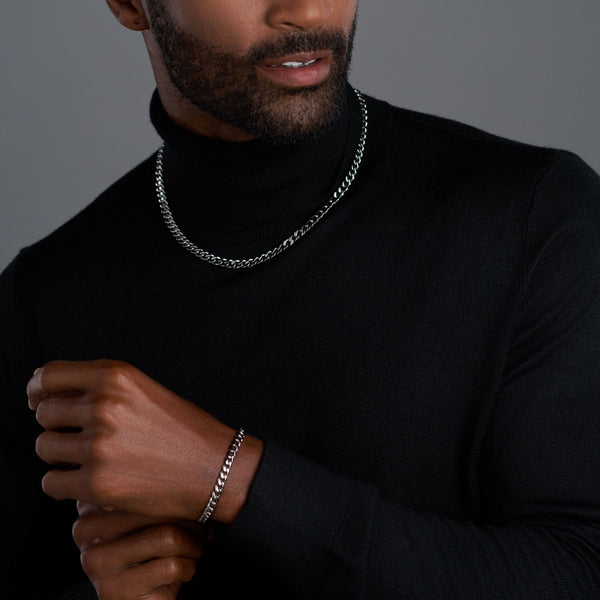
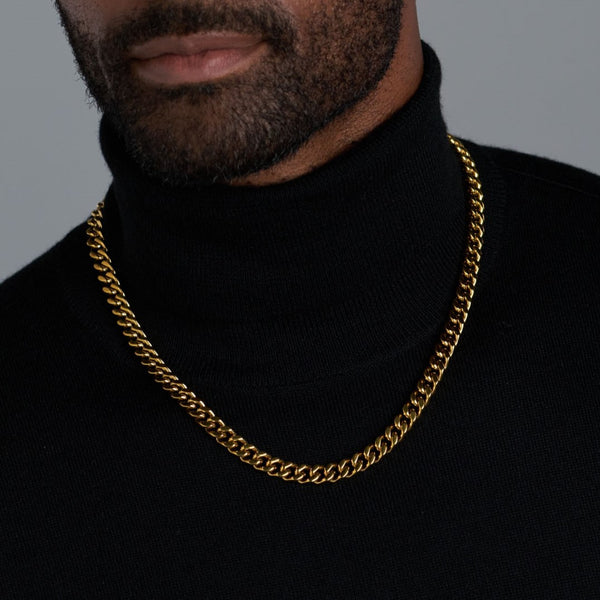
Turtlenecks, mock necks, and high-neck tops call for longer chains. A 22- to 24-inch piece sits over the fabric and keeps the jewelry visible. This is where larger pendants, bolder rope chains, and iced-out styles can make the outfit feel built rather than basic.
Chain Width Changes the Way Length Looks
Length is only half the decision. The wider and heavier the chain, the shorter it can appear on the body. That does not mean you need to size up every time, but it does mean proportions matter.
A slim 2 to 4 mm chain is flexible. It works at 18, 20, or 22 inches, layers easily, and leaves room for a pendant. These are strong foundation pieces when you want to wear more than one chain at a time.
Medium widths around 5 to 8 mm offer more standalone presence. A 20- or 22-inch rope, Franco, or Cuban link has enough shine to hold down a simple outfit by itself. This range is ideal if you want your jewelry to look elevated every day without going full statement piece.
Wide chains, especially bold Cuban links and iced-out styles, are meant to be seen. They often look best at 20 or 22 inches, where they have room to lay flat across the upper chest. Going too short can make a substantial chain feel cramped. Going too long can reduce its impact and make it swing around more than you want.
Choose a Pendant Chain With More Space
A pendant needs breathing room. If the chain is too short, the pendant can sit high on the throat and compete with your neckline. If it is too long, it can get lost against a shirt or sit awkwardly below the area you want to highlight.
For most pendants, 20 to 24 inches is the sweet spot. Smaller initials, crosses, and understated charms can work at 20 or 22 inches. Larger medallions, dog tags, and iced pendants usually earn their place at 22 or 24 inches.
Pay attention to the chain itself, too. A delicate pendant can look undersized on a thick Cuban, while a large pendant may overwhelm a thin chain. Match the visual weight. If the pendant is the star, use a chain that supports it without stealing the spotlight.
Build a Layered Look Without the Tangle
Stacking chains is about contrast, not just adding more metal. The easiest way to layer is to choose pieces with at least a two-inch difference in length. For example, pair an 18-inch tennis chain with a 20-inch Cuban, or wear a 20-inch rope chain above a 22- or 24-inch pendant chain.
Keep the top layer cleaner and closer to the neck. Let the lowest chain carry the pendant or biggest link. This gives each piece its own lane and helps prevent the layers from looking like one heavy knot of metal.
Mixing textures creates more visual payoff than wearing three nearly identical chains. Try a smooth tennis chain with a rope chain, or a clean Cuban link with a pendant chain. You can keep the metal color consistent for a polished set, or mix tones when the rest of your accessories are intentional enough to support it.
If you are new to stacking, do not force three or four pieces at once. Two chains with different widths and lengths look deliberate, feel comfortable, and work with more outfits. Build from there.
Measure Before You Commit
The fastest way to check a length is with a soft measuring tape. Wrap it around your neck and let it drop where you want the chain to sit. If you do not have a tape, use a string, mark the length, then measure it with a ruler.
Try the measurement while wearing a shirt with your usual neckline. Stand in front of a mirror, turn sideways, and check where the chain would land on your chest. This extra minute can save you from choosing a length based only on a product photo, where styling, body type, and chain width may be different from yours.
If you are between sizes, decide based on the chain’s job. Size down when you want a snug layer or a sharper collarbone look. Size up when you are adding a pendant, wearing a thick link, or want the piece to sit over shirts more often.
Do Not Let Old Rules Pick Your Jewelry
Traditional sizing charts often split chain lengths into men's and women's categories. Use them as rough references, not limits. The better question is where you want the chain to land and how much presence you want it to have.
A woman can wear a 22-inch Cuban with an oversized blazer and make it the whole look. A man can wear an 18-inch tennis chain as a clean, close layer. Style is about proportion and attitude, not a label on a chart.
For a gift, 20 inches is a versatile choice when you do not know the recipient's preference. A 22-inch chain is a safer option for someone who prefers pendants, larger builds, or looser-fitting jewelry. When the gift is meant to make a statement, consider the outfits they wear and choose a chain that will not stay hidden.
The best chain length is the one that looks right the second you catch your reflection. Start with your neckline, give bold links and pendants enough room, and build your stack with purpose. Then wear it like it was made for your fit.